
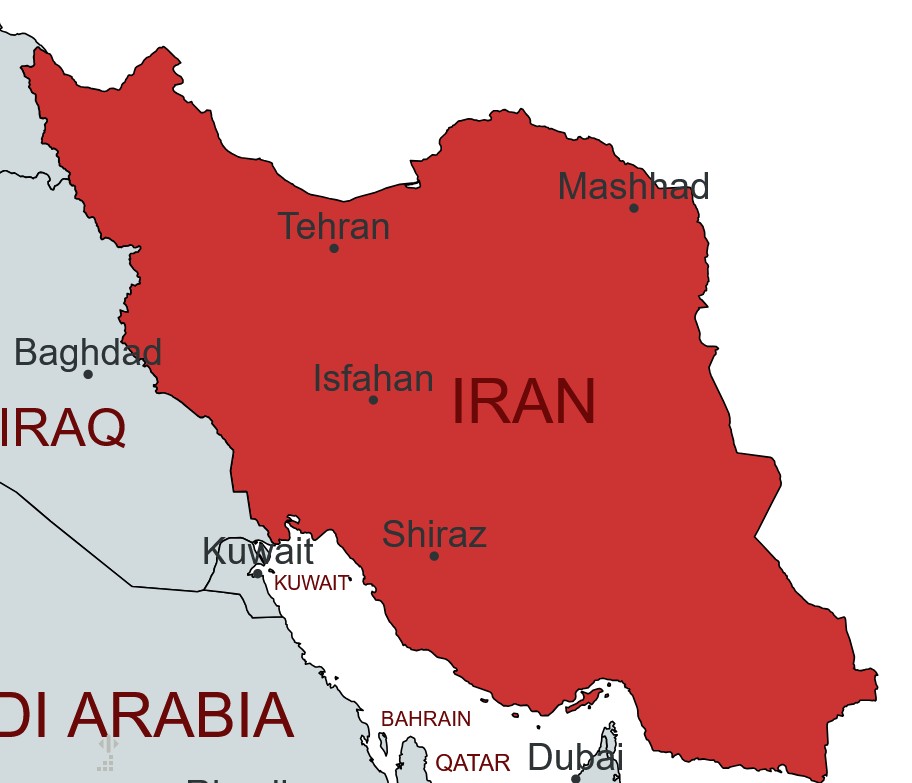
The Strait of Hormuz has degenerated into an active free-fire zone as the United States and Iran trade direct military blows, choking off the world’s most vital energy corridor. On Tuesday, 8 September 2026, the Islamic Revolutionary Guard Corps launched ballistic missiles at two American destroyers operating in the Gulf, dramatically expanding a confrontation that began in February. The missile assault followed a direct warning from Iranian army chief of staff Ali Abdollahi, who pledged to strike American bases across the Middle East if Washington continued to attack Iranian oil tankers. Iran also announced the capture of an advanced American unmanned underwater drone inside the waterway, displaying the equipment as proof of Western espionage. The Pentagon downplayed the loss, claiming the vessel was merely an older, broken model carrying no classified data. Disputed drone wreckage matters little when heavy warships take direct missile fire. Maritime brinkmanship has now turned into open warfare.
The maritime artery that normally carries a fifth of all global crude petroleum and liquefied natural gas sits virtually frozen. Tehran has asserted practical operational command over the narrows, turning an international maritime highway into an extortionate tollgate. Under new rules dictated by Iranian authorities, foreign commercial ships must request formal entry clearance and pay steep transit levies before navigating the channel. The United States has countered with a full naval blockade of Iranian commercial harbours, deploying warships to cut off Tehran’s sea trade entirely. That American blockade provoked Iranian retaliatory strikes on Western shipping, completely destroying the fragile maritime truce brokered in April. Commercial shipping houses now avoid the waterway altogether rather than risk their vessels to missile batteries. Gunboat diplomacy has thoroughly shut the strait.
Global energy markets reacted to the worsening military stalemate with immediate dread, driving benchmark crude prices towards triple digits. Brent crude surged to an intraday peak of $99.46 per barrel on Tuesday before settling near $97 as trading desks factored in severe supply shortages. The price leap came as Yemen’s Houthi militia pounded critical Saudi energy installations and civilian districts, wounding 73 people and forcing Aramco to shut units at its Jazan refinery. Because the Houthis run a parallel blockade along the Red Sea coast, Saudi Arabia cannot divert its Gulf crude to western terminals without facing missile fire. International energy analysts warn that a prolonged closure of both corridors will spark a severe global fuel crunch. War in the desert now drains the world’s energy supplies. Commodity traders prepare for a brutal autumn.
The economic damage from this naval conflict extends far beyond the Middle East, hitting import-dependent developing nations like Nigeria with brutal force. Soaring international crude benchmarks push domestic wholesale diesel prices past N2,000 per litre and drive retail petrol above N1,300 across Lagos and Abuja. Local haulage costs climb daily, driving basic food inflation into territory that threatens household survival. The Central Bank of Nigeria has kept its benchmark interest rate at 26.50 per cent to steady the naira, making factory credit unaffordable for domestic manufacturers. Although Nigeria’s official merchandise trade balance shows paper surpluses from high oil receipts, the gains vanish into expensive fuel imports. Higher oil prices bring no real wealth to ordinary citizens. Global disruptions punish poor economies first.
Inside Iran, the domestic economy is buckling under the combined weight of the American naval blockade and regional isolation. Iranian President Masoud Pezeshkian acknowledged that national trade volumes have contracted by up to 35 per cent, with essential imports falling at an alarming rate. The United Arab Emirates cut all financial and commercial dealings with Tehran in late August, closing the primary banking channel through which Iranian merchants evaded Western controls. The Islamic Republic faces an acute domestic fuel crisis, with energy officials warning that the country holds barely two months of petrol stocks. The domestic squeeze crushes ordinary households, where average monthly wages have shrunk to $125 against basic family living expenses of $450. Economic misery fuels domestic unrest across Iranian provinces. Sanctions drain the street while leaders trade missile salvos.
The crisis has also produced bizarre geopolitical theatre in Washington, where domestic electoral pressures distort foreign policy. Donald Trump recently shared a map on social media labelling the Strait of Hormuz a new American territory, claiming Washington would formally annex the international waterway once it defeated Iran. White House aides later insisted the president was joking, but Iranian diplomats treated the post as an outrageous breach of sovereign rights. Iranian Deputy Foreign Minister Kazem Gharibabadi stated bluntly that the strait has always been Iranian and will open or close only under Tehran’s orders. Meanwhile, American Vice-President JD Vance admitted that the administration’s main priority is keeping petrol prices cheap for American voters ahead of midterm elections. Strategic military goals take second place to the domestic price of fuel. Clumsy campaign rhetoric only complicates delicate naval operations.
Tehran has turned to quiet regional diplomacy with Oman to salvage its commercial lifeline and bypass American naval patrols. Senior Iranian officials, led by former security chief Mohsen Rezaei, revealed plans to establish a shared commercial corridor through contiguous Omani and Iranian coastal waters. Tehran wants to use this joint channel to collect transit fees from neutral merchant ships while keeping American convoys out. Yet the plan faces immense legal and logistical hurdles, as Western shipping insurers refuse to cover hulls navigating without American escorts. Washington insists that international law guarantees free transit for all vessels, flatly rejecting Tehran’s right to impose tolls. Muscat walks a fine line between its powerful neighbour and its Western security partners. Corridor deals cannot hold without broader regional peace.
The confrontation has reached a point where neither Washington nor Tehran can afford a diplomatic retreat. Supreme Leader Ali Khamenei cannot surrender control of Hormuz without discrediting the revolutionary state before its regional proxies. The White House cannot lift its naval blockade without handing Tehran a major political victory weeks before domestic elections. Both combatants remain trapped in a destructive logic of escalation, launching drones and missiles to avoid showing weakness. A miscalculated strike on a warship or energy terminal could spark an all-out regional conflagration overnight. With international mediation stalled, the battle for the strait will continue to dictate the price of food, fuel, and transport worldwide. Control of narrow waters now governs the global economy.