
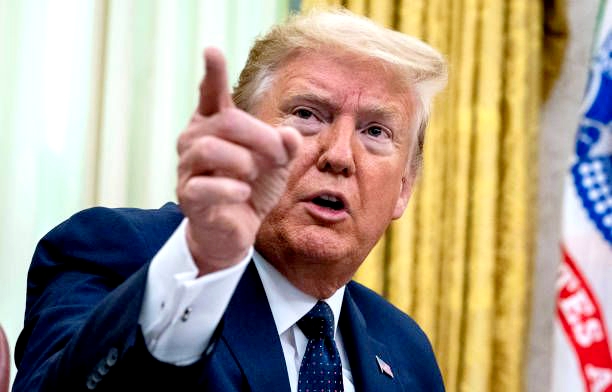
Donald Trump publicly ordered Ukrainian President Volodymyr Zelenskyy on Sunday to stop long-range drone attacks on Russian diesel infrastructure. The American president delivered the instruction while speaking to reporters on the sidelines of the Irish Open tournament at his Doonbeg golf links. He insisted that Ukrainian strikes on refineries were causing a severe worldwide diesel shortage that is hurting global markets. His comments arrived forty-eight hours after American retail diesel hit a historic record average of 6.06 dollars per gallon on Friday. The price surge threatens to batter the White House ahead of the November midterm elections. Fuel costs in America now sit well above the 3.71 dollars recorded twelve months ago. Trump told Kyiv to find other battlefield targets that do not disrupt international fuel markets. Politics at home quickly overrides alliances abroad.
The American president tied the global fuel crisis directly to Ukrainian tactics rather than Middle Eastern unrest. He revealed that he had spoken directly with Zelenskyy following a separate conversation with Russian President Vladimir Putin. Trump argued that Ukrainian drone squads have hit too many crude processing plants across western Russia. Those strikes forced Moscow to introduce domestic fuel rationing and impose a total ban on diesel exports in July. The resulting supply deficit removed hundreds of thousands of barrels from European and Atlantic trade. The White House fears that rising transport costs will drag down its domestic political standing. Freight companies routinely pass high diesel bills straight to supermarket shelves. High pump prices guarantee poor election results.
Kyiv views the matter through a completely different strategic lens. Ukrainian military planners insist that Russian refineries and oil storage depots represent legitimate military targets. The petroleum sector provides the primary tax revenues that finance Moscow’s military campaign. Fuel depots also provide the direct logistical power that keeps Russian tank brigades moving along frontlines in the Donbas. Over the weekend, Ukrainian long-range drones struck the Sloviansk-on-Kuban oil refinery in Russia’s Krasnodar region. Defence intelligence officers in Kyiv confirmed that the strike set a key distillation unit and the refinery’s storage tank farm on fire. Another drone raid targeted industrial plants near Nizhnekamsk in Tatarstan, killing two people. Ukraine refuses to spare the economic engine of its invader.
The timing of Trump’s demand exposes deep hypocrisy to Ukrainian officials in Kyiv. Russia launched more than four hundred drones and missiles against Ukrainian towns overnight into Sunday. Russian strikes damaged residential high-rise blocks in the Black Sea port of Odesa, killing two civilians and injuring dozens. Another Russian missile struck a filling station near the Yahodyn border crossing with Poland. Moscow systematically targets Ukrainian electrical substations, gas storage wells, and municipal power grids ahead of the coming winter. Yet Washington demands that Kyiv cease hitting Russian fuel units while Russian missiles flatten Ukrainian thermal plants daily. Ukrainian leaders point out that they fight an existential war of survival with asymmetric weapons. Restraining Ukrainian drones hands Moscow an unearned advantage.
The global energy crunch involves far more than just damaged Russian distillation towers. The International Energy Agency reported on Friday that Gulf diesel exports collapsed to roughly a quarter of normal peacetime volumes. That sudden drop stems from the wider conflict between the United States and Iran around the Strait of Hormuz. Combined diesel exports from Russia and the Persian Gulf normally account for almost forty-five per cent of all seaborne trade in middle distillates. Squeezing both supply taps at the same moment creates a structural market deficit that no spare reserve can fix. Houthi advances toward the Bab el-Mandeb strait have also forced commercial tankers to sail around the Cape of Good Hope. Longer tanker voyages burn additional bunker fuel and lock up transport tonnage for weeks. Physical geography cannot supply phantom barrels.
The diplomatic spat highlights the transactional nature of Trump’s foreign policy framework. Earlier in the summer, Trump had suggested that Ukrainian strikes on Russian energy assets might force Moscow into serious peace negotiations. Now that diesel prices threaten American voters ahead of midterm polling, he reverses his tactical assessment entirely. The White House treats foreign policy primarily as an extension of domestic electoral calculations. Trump even dangled the prospect of five-thousand-dollar voter cash payments if his party retains control of Congress. That populist domestic agenda requires cheap domestic petrol and diesel to keep voters happy. Strategic commitments to Eastern European security quickly take second place behind the American consumer price index. Midterm politics dictates international military priorities.
Moscow wasted little time exploiting the public rift between Washington and Kyiv. Kremlin spokesman Dmitry Peskov announced on Sunday that Russia remains open to resuming trilateral peace talks in October. Peskov pointed to quiet diplomatic meetings involving American envoys Jared Kushner and Steve Witkoff as evidence of possible progress. Moscow wants to lock in its territorial gains while Washington puts pressure on Kyiv to stop cross-border strikes. Russian military planners welcome any American effort to declare Russian refineries off-limits to Ukrainian drone units. A protected domestic energy base allows the Russian army to maintain steady logistics runs across occupied territories. The Kremlin plays a patient diplomatic game.
The dispute leaves Zelenskyy facing an impossible operational choice. Defying the American president risks halting vital deliveries of American intelligence data, satellite feeds, and spare weapons parts. Yet obeying Trump’s order means surrendering Ukraine’s most effective asymmetric lever against the Russian economy. Long-range drones developed by Ukrainian engineers represent one of the few domestic weapons that reach deep into Russian territory. Halting those strikes leaves Russian industry completely safe from retaliatory damage while Ukrainian cities burn. Kyiv has already reduced Russian refining runs by several million barrels through cheap, homegrown technology. Giving up that tactical advantage to appease American motorists makes little sense to commanders in the field. Ukraine must balance tactical necessity against great-power displeasure.