
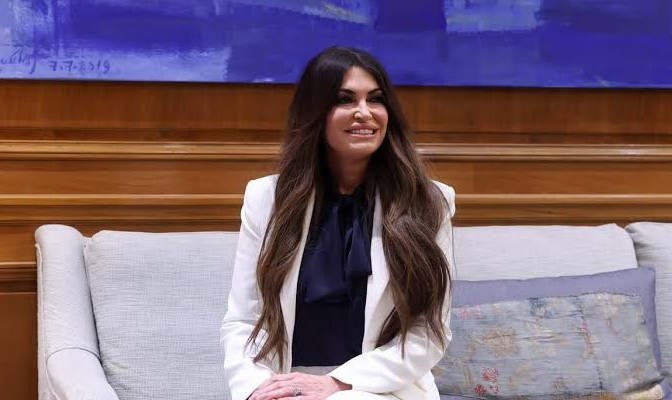
President Donald Trump is weighing the immediate dismissal of US Ambassador to Greece Kimberly Guilfoyle following serious allegations involving financial solicitations and lavish gifts during her confirmation process.
Diplomatic protocol in Athens was shattered this week as allegations of financial impropriety and access-for-sale schemes placed United States Ambassador to Greece Kimberly Guilfoyle at the centre of an expanding political scandal. President Donald Trump is actively considering whether to remove the high-profile envoy following widespread reports detailing requests for lavish personal gifts and financial solicitations directed at political donors prior to her Senate confirmation.
The controversy erupted into public view at an exceptionally sensitive time for American foreign policy in the region, coinciding directly with a diplomatic visit to Greece by Secretary of State Marco Rubio. As the chief American diplomat delivered a major address on Western democracy at the foot of the historic Acropolis in Athens, senior administration officials found themselves managing growing fallout over the ambassador’s alleged conduct.
Whitehall and Washington insiders note that the situation has sparked deep frustration within the highest levels of the executive branch. While the White House has yet to issue a formal termination decree, advisers indicate that the president is evaluating his options and could reach a final determination regarding her diplomatic tenure in short order.
Text Messages and Solicitations Under Scrutiny
At the centre of the mounting investigation are allegations brought forward by former political donors regarding financial requests made during the confirmation process. Eric Deters, a former donor aligned with the administration, disclosed that Guilfoyle sent him text messages requesting a $100,000 wire transfer to clear an outstanding American Express credit card balance shortly before her Senate confirmation hearings.
Deters stated publicly that he did not execute the requested financial transaction, citing a lack of immediate liquid assets at the time of the request. In response to the published message exchanges, legal counsel representing the ambassador vigorously contested the authenticity of the digital correspondence, while Guilfoyle herself informed senior administration representatives that she had never dispatched the text messages in question.
The published accounts nevertheless suggest a broader pattern of seeking financial gain in exchange for political access. Reports indicate that officials are reviewing additional claims alleging that the envoy solicited funds from foreign and domestic figures by offering tailored access to prominent administration personalities, a practice that directly violates federal ethics standards for serving diplomatic representatives.
Executive Reactions and Public Accountability
President Trump offered little defence of his ambassador when questioned by reporters regarding the emerging allegations. Speaking on Friday, the president acknowledged hearing initial reports about the situation but refrained from offering an endorsement or shielding his long-time political ally from public scrutiny.
“I just heard about it. Too bad. I mean, I don’t know,” Trump remarked, adding that while he was not fully briefed on every detail, “she was always very nice”. The restrained response aligns with the president’s documented history of taking swift action against associates perceived to be monetising their proximity to his administration or causing public embarrassment to the executive office.
Vice President JD Vance similarly signalled caution when asked about the situation, emphasising that while allegations should not be adjudicated solely in the media, systemic access-for-pay operations remain fundamentally intolerable within public service. “Of course I don’t like anybody selling access to another government official, certainly a high-level government official,” Vance stated, noting that if substantive wrongdoing is verified through proper channels, appropriate consequences must follow.
Familial Networks and Political Appointments
Guilfoyle’s appointment to the prestigious diplomatic post in Athens followed years of prominent involvement within the president’s political movement. Having previously served as a senior advisor and key fundraising figure during presidential campaign cycles, she maintained exceptionally close personal ties to the inner circle of the ruling family, including a four-year engagement to Donald Trump Jr..
Following the conclusion of that personal relationship, her nomination to lead the embassy in Greece was viewed across Washington as a prized diplomatic assignment reflecting her standing within the broader political network. However, the recent series of disclosures has strained those longstanding ties, with key allies of both the president and his eldest son describing the unfolding episode as deeply damaging to institutional credibility.
The controversy highlights ongoing debates over the appointment of political fundraisers and media figures to sensitive ambassadorial posts. Operational diplomacy in strategic European capitals requires strict adherence to international norms and statutory ethical boundaries, matters that become severely compromised when personal financial dealings intersect with public duties.
Broader Fallout Across Strategic Alliances
The timing of the scandal has complicated American diplomatic outreach in Southeastern Europe. Greek government officials and European defence partners watch the situation closely, aware that potential leadership changes at the embassy could temporarily disrupt ongoing bilateral negotiations covering regional security, maritime trade, and defence cooperation.
Should the White House proceed with a formal dismissal, the administration will need to put forward a replacement candidate capable of restoring institutional stability and navigating a rigorous Senate confirmation process. Such a transition would require interim leadership by career diplomatic staff at the embassy in Athens to ensure operational continuity.
As federal ethics officials and congressional committees begin reviewing the documented claims, the immediate focus remains on the White House. With pressure mounting from both political opponents and internal advisers, the coming days will determine whether the administration chooses to cut ties with the embattled envoy or allow formal administrative reviews to run their course.