
Nearly a billion naira that flowed for years into hundreds of bank accounts tied to workers who may never have existed now belongs to the Federal Government, after a Federal High Court in Abuja ordered the permanent forfeiture of N941,994,079.86 traced to an alleged ghost worker scheme buried inside the country’s central payroll platform.
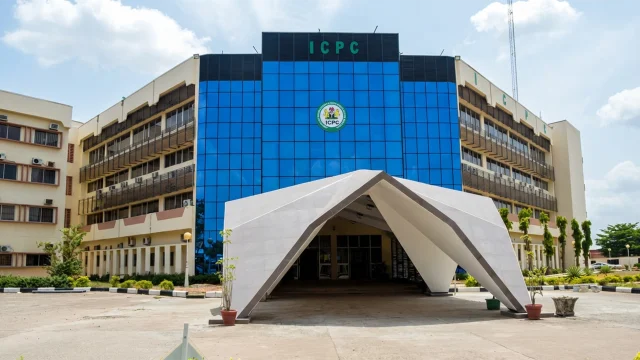
Justice Binta Fatima Nyako delivered the ruling on July 13, 2026, granting an ex parte application by the Independent Corrupt Practices and Other Related Offences Commission (ICPC), which argued that the money was the proceeds of unlawful activity uncovered during its investigation into the Integrated Payroll and Personnel Information System (IPPIS). “That an order is hereby made for the final forfeiture to the Federal Republic of Nigeria of the sum of N941,994,079.86 seized during investigation into the IPPIS payroll scam in the year 2024,” the judge held.
According to the Commission, whose position was conveyed in a statement by its Head of Media and Public Communications, Okor Odey, the funds were traced to 909 bank accounts held across more than a dozen financial institutions. Investigators said fictitious IPPIS identities had been created for non existent personnel across several Ministries, Departments and Agencies, with salaries paid over several years into accounts belonging to individuals and companies. In several cases, the ICPC said, the account names did not match the purported employees, while some accounts received multiple salary payments at the same time.
The trail, by the Commission’s account, began with a systems study it conducted in 2023 that flagged widespread irregularities in the IPPIS and pointed to numerous ghost workers embedded in government payrolls. Those findings prompted President Bola Ahmed Tinubu to approve a comprehensive audit of the platform, leading to a joint investigation by the ICPC and the Office of the Accountant General of the Federation in April 2024. That exercise identified 587 suspected ghost workers. Between August and November 2024, the Commission placed Post No Debit restrictions on the flagged accounts, freezing the N941.9 million that has now been forfeited.
The institutions caught in the dragnet cut across the core of the federal establishment. They include the Nigeria Police Force; the Federal Ministries of Defence, Education, Agriculture and Rural Development, Works, Water Resources and Interior; the National Board for Arabic and Islamic Studies; the Office of the Accountant General of the Federation; and five federal universities, namely the University of Benin, the University of Calabar, the University of Nigeria, Nsukka, the University of Maiduguri and Ahmadu Bello University, Zaria.
The Commission was careful to distinguish the genuine from the suspect. A verification exercise in 2025 cleared 120 civil servants whose identities and employment were confirmed, and they were reinstated on the platform. That left 467 accounts linked to individuals whose identities could not be established even after the ICPC, following the court’s directive, published the names of 910 suspected beneficiaries in two national newspapers on March 18, 2026, inviting anyone with a legitimate claim to come forward. None did for those accounts. The Commission’s prosecution counsel, Hamza Sani, told the court that IPPIS numbers, the names of the purported workers and the beneficiaries’ banking details had been tendered in evidence.
The case lands squarely on one of Nigeria’s most stubborn governance problems. The ghost worker, a name that draws a salary without a body to earn it, has shadowed the public service for decades. Before computerised payrolls arrived in the mid 2000s, the practice was so entrenched that estimates once suggested individual senior officers were running dozens of fictitious staff each. IPPIS itself was introduced precisely to end this, centralising salary payments and anchoring them to biometric records so that only verified employees could be paid.
By several official accounts, it worked, at least for a time. The then Director General of the Bureau of Public Service Reforms, Dr Joe Abah, has stated that the platform removed about 65,000 ghost workers and saved the government more than N185 billion, figures widely cited as evidence of the reform’s early impact. Earlier purges told a similar story. In 2011, the government reported removing tens of thousands of fictitious names from the payroll, while the federal cleansing exercise around 2016 was said to have trimmed the monthly wage bill by roughly N13 billion. In September 2020, the Ministry of Finance announced the removal of more than 25,000 ghost workers from MDAs. State audits have repeatedly uncovered thousands more, from Kaduna to Benue to Borno, where tens of thousands of names were once found drawing salaries from the primary school system alone.
Yet the same records show the problem mutating rather than disappearing. As far back as 2019, the ICPC questioned dozens of federal directors over the alleged diversion of billions through IPPIS manipulation, and academic studies of the platform have repeatedly warned that centralised payment, on its own, cannot substitute for continuous identity verification and accountability. The N941.9 million forfeiture is, in that sense, both a recovery and a warning, evidence that determined insiders found a way to game a system built to stop them.
The forfeiture also arrives at a moment of renewed scrutiny for IPPIS. In May 2026, the Accountant General of the Federation, Dr Shamseldeen Ogunjimi, convened a three day retreat to review the platform’s implementation, acknowledging gaps encountered over the years even as officials credited it with reducing leakages and strengthening fiscal discipline. Universities that exited the system in earlier disputes have complained of salary disruptions, and during the 2026 Civil Service Week the government unveiled an upgraded IPPIS self service module to give workers direct access to their own records. Officials have framed these steps as part of President Tinubu’s broader public financial management reforms.
For the ICPC, the ruling reinforces a message it has pressed throughout its recent enforcement drive: that payroll fraud is prosecutable and recoverable. The Commission said the judgment underscores its commitment to combating corruption, safeguarding public funds and promoting transparency and accountability in the public service. What the case does not yet answer is who created the 467 unclaimed identities, and whether anyone will face prosecution for building the ghosts in the first place.