
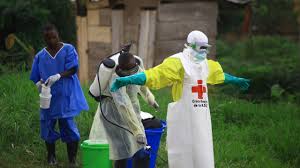
United Nations agencies have mounted an urgent emergency response to a fast-spreading Ebola outbreak in the eastern Democratic Republic of the Congo, mobilising medical supplies, logistics support, and personnel across multiple affected provinces as the death toll climbs and the virus threatens to breach more urban centres.
UN Spokesperson Stephane Dujarric disclosed the scale of the response on Thursday during a press briefing in New York, confirming that the outbreak had extended beyond its original epicentre into three major provinces, raising alarm among global health authorities.
“Our humanitarian and peacekeeping colleagues are continuing to support the government’s efforts regarding the fast-spreading outbreak of Ebola and the deterioration of the humanitarian situation,” Dujarric told journalists, according to the United Nations.
The province of Ituri remains the epicentre of the crisis, with the towns of Rwampara, Mongbwalu, and Bunia recording the heaviest concentration of cases. Dujarric noted that while these towns may be unfamiliar to international audiences, they are densely populated, making rapid containment critically important.
The UN peacekeeping mission MONUSCO has deployed four light passenger vehicles to support surge team operations in Ituri and positioned one helicopter to facilitate flights into affected areas. Two ambulances and two armoured vehicles are also en route from Goma to Bunia to support medical evacuations and outreach in high security risk zones, with all assets designated for use by World Health Organisation field teams.
Growing concern has emerged over the outbreak’s spread into North Kivu province, where confirmed cases have now been recorded in Goma, Butembo, and Katwa — all urban centres with documented histories of Ebola transmission. Partners are strengthening surveillance and introducing screening at points of entry across the province. MONUSCO has additionally dispatched motorcycles from Goma and Beni to strengthen the mobility of health teams engaged in contact tracing and rapid response.
A new case was also reportedly confirmed by local authorities in South Kivu, in the town of Bukavu, involving a person arriving from Tshopo, a region bordering Ituri province — a development that signals dangerous geographic expansion of the outbreak.
Dujarric underscored the complexity of the response environment. “This outbreak is unfolding in a context marked by displacement, marked by insecurity, marked by high population mobility and significant access constraints for humanitarians and peacekeepers,” he said.
The World Food Programme is facilitating the transport of aid workers, medical supplies, and essential cargo into hard-to-reach areas, while also providing food and nutrition assistance to patients, survivors, contacts, and affected households. WFP currently requires over 214 million dollars to sustain operations in the DRC broadly, with more than 10 million dollars needed specifically for Ebola response.
UNICEF has raised particular alarm over children, warning they “are especially vulnerable to the impacts of Ebola outbreaks, including disruptions to essential services, loss of parents and caregivers, stigma, psychosocial distress, and increased protection risks.” The agency has mobilised nearly 50 tonnes of supplies to date, covering disinfectants, personal protective equipment, water purification tablets, and water tanks. An Emergency Rapid Response team is also en route to Bunia.
Although over 2,000 community health workers are already deployed across affected areas, authorities warn that additional capacity and resources remain urgently needed, particularly in hard-to-reach zones.
The current outbreak is caused by the rare Bundibugyo strain of the Ebola virus, for which no approved vaccine or treatment currently exists. As of the latest figures, 139 people have died in the DRC, with approximately 600 suspected cases recorded. Uganda has confirmed two cases.
The DRC has battled Ebola 17 times since the virus was first identified 50 years ago. The WHO has declared the outbreak a public health emergency of international concern requiring coordinated international cooperation, stopping short of designating it a pandemic emergency.
NAN