
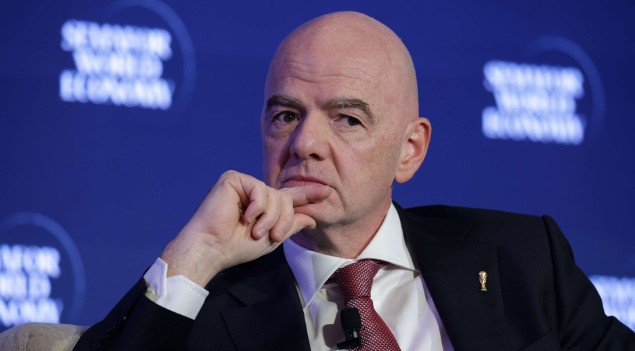
Gianni Infantino must soon answer to his own ruling body for an investment gamble that rattled global football. FIFA confirmed on Wednesday that it will submit a formal review of the abandoned FIFA Forward Enterprise scheme to the 37-member FIFA Council. The announcement follows a sharp rebuke from Jesper Møller, the Danish football chief who sits on FIFA’s Legal Committee. Mr Møller openly protested after FIFA officials stonewalled questions during a committee meeting last week. World football’s governing body responded with terse bureaucratic phrasing, noting its standing committees merely advise the Council in line with internal statutes. Yet the concession signals fresh vulnerability for Mr Infantino after months of institutional rancour. The Swiss-Italian administrator faces an increasingly sceptical board room. He cannot sweep this misadventure under the rug.
The uproar stems from an audacious effort to sell equity in world football’s crown jewels. In late July, Mr Infantino unveiled a proposal to spin off the commercial rights of the World Cup and the Club World Cup into a new entity valued at 20 billion dollars. External financiers stood to acquire a 20 per cent stake for roughly 4.2 billion dollars. To tempt member nations, Zurich dangled a one-off windfall of 20 million dollars per association. The pitch also promised to more than double regular cycle funding up to 2030. Cash-poor federations in Africa and Oceania saw immediate appeal in the payout. Powerful continental blocs detected an existential raid on the calendar and commercial sovereignty. The blueprint leaked into the open and provoked fury. Within days, the entire financial edifice crumbled.
Resistance coalesced with extraordinary speed across several continents. UEFA, the European governing body, led the counter-offensive and threatened a total boycott of FIFA tournaments. European officials denounced the initiative as an opaque deal hatched behind closed doors without basic consultation. The Asian Football Confederation in Kuala Lumpur and North America’s CONCACAF quickly joined the revolt. Critics pointed out that FIFA already sat on reserves exceeding 5 billion dollars, which made private equity capital look unnecessary. Sensing an open mutiny, Mr Infantino beat a humiliating retreat and withdrew the proposal. He claimed the scheme sought to unite the football family rather than sow discord. That retreat failed to settle the broader political storm.
The formal presentation to the Council now becomes a test of accountability. UEFA and its allies want full disclosure on the shadowy advisers and banking syndicates behind the plan. Mr Møller complained that administrators blocked legitimate scrutiny into who authorised negotiations and what liabilities FIFA incurred. Discontent has since hardened into a campaign to overhaul FIFA’s central governance. On Tuesday, Greek federation chief Makis Gagatsis and former German director Oliver Bierhoff endorsed UEFA’s push for structural change. Continental executives insist that the president wields far too much unchecked power in Zurich. They intend to use the coming Council debate to impose rigid oversight. Autocracy in sports administration is losing its gloss.
European rebel federations have also threatened direct political penalties. Several associations withdrew their formal backing for Mr Infantino’s re-election campaign. Whisper networks briefly floated the prospect of a formal vote of no confidence to unseat him before his term ends. That nuclear option appears premature given the arithmetic of global football. Mr Infantino built deep goodwill across Africa, parts of Asia, and South America through years of generous development grants. Insiders acknowledge that the incumbent retains sufficient delegate votes to survive a direct electoral challenge. Realising this, his European detractors have sensibly revised their battle plans. They now aim to clip his wings through statutory limits.
The calendar sharpens the stakes for every faction in Zurich. FIFA’s next elective congress takes place in Rabat on 18 March 2027, where Mr Infantino plans to seek a fourth term. FIFA headquarters recently confirmed that his candidacy remains unchanged. Yet his political capital looks noticeably depleted after the 2026 World Cup glow faded so rapidly. The aborted sale exposed sharp divisions between wealthy European stakeholders and the global majority. The Council review gives critics a pulpit to interrogate executive conduct on the record. It forces the president to defend a discredited venture before his peers. The days of effortless coronation appear over.
For football authorities in Africa and other developing regions, the fallout carries tangible financial costs. The promise of 20 million dollars per association offered cash-strapped federations a fiscal windfall. Many delegates welcomed the infusion to build pitches, fund youth programmes, and settle administrative debts. The collapse of the private equity scheme leaves those ambitions high and dry. European resistance protected the elite club game from commercial disruption, but smaller nations missed out on capital. That friction between continental giants and peripheral nations will dominate the upcoming Council session. Mr Infantino must now bridge that divide without the lure of outside billions. His authority will face its most rigorous audit yet.