
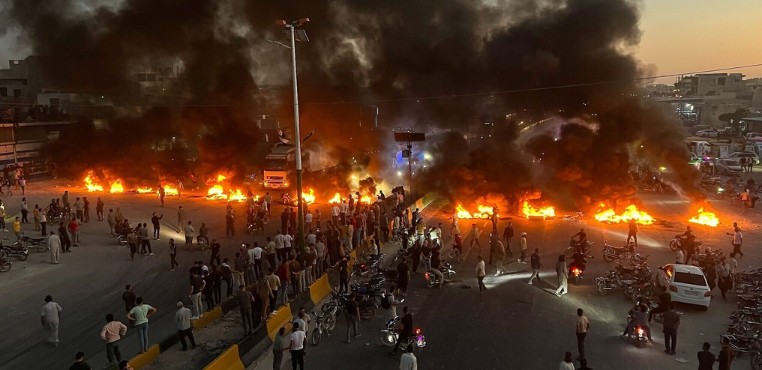
Demonstrators took to the streets across several Syrian cities on Sunday following sudden, steep price rises for petrol and diesel. The price adjustments took effect at midnight, sending public transport drivers into immediate wildcat strikes and cutting main arteries between urban hubs. In Idlib province, crowds burned tyres and vehicle debris to block a critical transport highway outside Maarat al-Numan for several hours. Unrest quickly spread east into the provinces of Hasakah, Deir al-Zour, and Raqqa, as well as northern towns including Hama and Khan Sheikhoun. Under the new official tariff bulletin, diesel surged by 40 per cent from 125 to 175 new Syrian pounds per litre. Top-grade 95-octane petrol jumped by 28.3 per cent to 195 pounds, while standard 90-octane fuel climbed by nearly 26 per cent. Damascus framed the tariff spikes as temporary measures driven by soaring global crude prices and domestic refinery maintenance. For millions of exhausted citizens, the price hikes deliver another unbearable financial shock. An impoverished population simply cannot afford the state’s imported energy bills.
The public fury reflects the grim economic reality of a society ground down by fourteen years of continuous armed ruin. Public transport operators refused to run rural bus routes on Sunday morning, leaving stranded commuters to walk along dusty provincial roads. In several market squares, demonstrators demanded the immediate rollback of the energy tariff schedule and chanted slogans against administrative incompetence. Syrian households already spend the bulk of their monthly incomes on basic bread and cooking supplies. When diesel jumps by two-fifths in a single night, the price of agricultural pumping and lorry freight moves upward immediately. Small shopkeepers cannot absorb these sudden overhead costs, passing them directly to shoppers who hold almost no savings. State officials admit that the revisions will hurt families, yet they offer no financial cushion to absorb the blow. Desperation now drives ordinary people into direct confrontation with police cordons. Empty pockets leave little room for quiet compliance.
The official justification from Damascus leans heavily on external geopolitical shocks and fragile domestic oil infrastructure. Energy Minister Mohammed al-Bashir stated on Saturday that domestic oil fields pump only 102,000 barrels per day. Syria requires roughly 325,000 barrels every day to keep power stations, water pumps, and vehicles running. The wide deficit forces the government to buy more than 200,000 barrels each day on international spot markets. Syrian authorities pointed to the wider war between the United States and Iran, which has choked Gulf tanker traffic and pushed crude benchmarks past triple digits. Damascus also cited the temporary shutdown of its primary coastal refinery at Baniyas for maintenance work. The state claims the overhaul will eventually expand refining capacity from 80,000 to 130,000 barrels per day. Yet engineering promises mean nothing to motorists waiting in day-long queues outside shuttered fuel stations. The arithmetic of energy dependence guarantees recurrent domestic crises.
The geography of the protests highlights the deep territorial fragmentation that still cripples the country. Demonstrations erupted simultaneously in state-held urban centres and regions run by rival political factions. In northeastern districts held by Kurdish authorities, fuel strikes brought commercial haulage to an immediate standstill along the Euphrates River corridor. In northwestern towns, angry crowds condemned local administrative councils for passing on wholesale price increases without public consultation. The shared economic grievance has united disparate communities that remain divided by military checkpoints and frontline trenches. Fuel serves as the basic circulatory fluid for Syria’s fractured economy. When the supply chain snaps, every regional enclave feels the pain equally. The protests demonstrate that economic misery ignores political borders.
The closure of the Baniyas refinery exposes the rot inside Syria’s state-run industrial apparatus. Decades of heavy fighting, international trade embargoes, and financial corruption have starved the coastal facility of modern spare parts and routine maintenance. Technicians must patch ageing pipes and distillation units with makeshift tools, causing frequent unplanned shutdowns. When the primary domestic processing plant goes offline, the treasury must spend scarce foreign cash on expensive imported distillates. Syria possesses little hard currency in its central bank vaults to finance emergency tanker deliveries. The government must borrow funds or rely on high-interest credit lines from foreign allies to keep coastal ports supplied. State oil planners operate on a hand-to-mouth basis, reacting to supply crunches rather than anticipating them. A state that cannot refine its own crude remains hostage to foreign maritime routes. Administrative paralysis turns routine mechanical repairs into nationwide economic disasters.
The ripple effects of the fuel increase will spread rapidly into agricultural production and food security. Syrian peasant farmers depend on diesel engines to pump irrigation water from underground wells to grow wheat and seasonal vegetables. A 40 per cent jump in diesel prices will render summer cultivation unprofitable for tens of thousands of smallholders. Food distribution networks will contract further as haulage firms park lorries rather than run trips at a loss. Wholesale food markets in Aleppo and Damascus already report thinner deliveries and higher asking prices for staples like onions, tomatoes, and grain. International relief agencies warn that more than ninety per cent of Syrians now live far below the poverty line. Cutting agricultural fuel subsidies during an active hunger crisis displays an astonishing disregard for rural stability. When tractors stop working, harvest bins stay empty.
The unrest presents a sharp security test for authorities who have spent years suppressing public dissent. Security forces deployed around municipal administration buildings in several provincial towns on Sunday afternoon, watching crowds warily from behind riot shields. While police avoided using lethal gunfire during the initial road closures, intelligence units will likely move to arrest prominent strike organisers under cover of darkness. In earlier years, similar fuel protests in southern towns like Sweida quickly mutated into broader political campaigns demanding sweeping regime change. Damascus fears that spontaneous demonstrations over commodity prices could rekindle wider civil unrest across exhausted governorates. The state’s traditional playbook of relying entirely on police batons and vague economic promises looks increasingly hollow. Batons cannot lower the price of diesel at the pump.
The coming days will show whether the government possesses the fiscal flexibility to walk back the tariff increases. Energy ministry spokesmen maintain that prices will remain under continuous review as international petroleum markets fluctuate. That statement leaves the door open for small, face-saving tariff cuts if street demonstrations grow unmanageable. Yet the fundamental structural drivers of the crisis remain entirely beyond Damascus’s control. Syria lacks the sovereign oil output, the refining capacity, and the foreign cash reserves needed to shield its citizens from global price swings. As long as Middle Eastern maritime corridors burn and domestic refineries lie in disrepair, fuel supplies will remain scarce and expensive. The fires burning on the highway near Maarat al-Numan signal a society pushed to its absolute financial limit. Citizens have run out of ways to survive the state’s economic decline.