
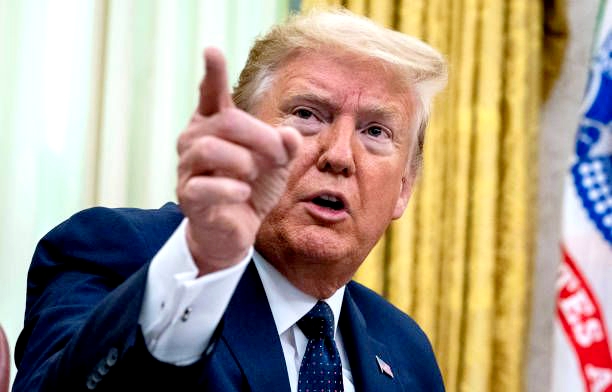
The United States Department of State has proposed draft rules that compel parents to prove their own citizenship or immigration status when applying for passports for their children. The measure enforces President Donald Trump’s executive order of 6 August 2026, which aims to curb birthright citizenship and suppress birth tourism. The draft guidance turns standard travel desk reviews into an aggressive citizenship screen. State Department spokesman Tommy Pigott defended the move, stating the administration will protect the meaning and value of American citizenship. The executive branch wants to stop pregnant foreign nationals who arrive on visitor visas from securing automatic citizenship for their newborns. The administration targets birth tourism as a corrupt trade that debases sovereign birthrights. Yet turning consular clerks into border investigators will create huge administrative friction for ordinary families. Bureaucratic checkpoints always expand far beyond their original targets. Hard borders now begin at the passport counter.
Under current procedures, parents seeking a passport for a native-born child submit proof of parentage, an official birth certificate, and valid photo cards. The current form asks applicants to tick a box declaring citizenship without demanding corroborating paperwork. The proposed framework overhauls that simple model completely. Every guardian must now present a domestic passport, a primary birth certificate, or immigration papers such as an I-94 arrival record or a green card. Adjudicators will scrutinise these papers to assess whether the child falls under Executive Order 14418. The government plans to refuse passports to children of foreign state workers, individuals labelled alien enemies, or those linked to commercial birthing arrangements. This documentation hurdle shifts the burden of proof onto parents. When paper rules tighten, common citizens suffer the longest delays.
The new rules try to skirt a major legal roadblock that wrecked the White House’s earlier immigration offensive. In June 2026, the Supreme Court struck down a broader executive attempt to cancel birthright citizenship in a decisive 6-3 ruling. Chief Justice John Roberts held that the Fourteenth Amendment guarantees citizenship to children born on American soil, even if parents lack lawful status. Defeated at the high court, the White House redrafted its plan to target narrower exceptions like foreign emissaries and fraud rings. The administration hopes this narrower focus will survive judicial scrutiny. By turning passport renewals into an immigration audit, officials attempt to achieve through administrative delays what the courts banned by decree. Executive orders often seek back doors when front doors slam shut. Clever redrafting rarely disguises unconstitutional intent.
Civil rights lawyers have already filed class-action suits in two federal district courts to halt the measure before it takes effect. In Maryland, District Judge Deborah Boardman expressed deep scepticism regarding the legality of the directive during initial hearings. The judge permitted the plaintiffs to amend their complaints to challenge the State Department’s draft rules directly. Justice Department lawyers argued that court injunctions are premature because public guidelines remain in draft form. Yet attorneys for immigrant infants argue that creating stateless children through administrative delays causes immediate harm. The legal fight will climb back to the Supreme Court within months. A conservative bench that previously defended the Fourteenth Amendment will face another constitutional test. Courts must draw the line between administrative rules and sovereign rights.
The proposed policy hits Nigerian families who travel to the United States for child delivery particularly hard. For decades, wealthy professionals from Lagos and Abuja paid private maternity bills in Texas and Georgia to give their offspring global mobility. Private medical travel agencies in Nigeria package hospital bookings, visa coaching, and rental flats into expensive birth tourism packages. The new rules mean parents who used visitor visas to deliver babies will struggle to obtain consular travel documents for their infants. If parents cannot present lawful long-term residency records, passport desks will flag the applications for fraud reviews. Consular rejections will trap newborn infants without valid travel booklets to return home. The Nigerian middle class relies heavily on foreign passports as insurance against domestic instability. That escape route is closing fast.
The policy will also slow down passport processing times across the entire American consular network. Passport offices already deal with massive seasonal backlogs and short-staffed service counters. Requiring examiners to check visas, entry stamps, and parentage histories will double the processing time for each application. Millions of native-born citizens who lose old family papers will face endless administrative queries. Rural Americans, low-income households, and adopted children will encounter higher paperwork hurdles to get simple travel documents. An administrative machine designed to process travel papers will turn into an intrusive internal checkpoint. When a state tightens control over a minority, the bureaucratic drag spreads to everyone. Complexity is a tax that falls on all citizens alike.
The White House turns birth tourism into a major political wedge ahead of the upcoming electoral season. Conservative campaign strategists know that attacking birthright citizenship motivates their party base across rural voting districts. The administration portrays child delivery on visitor visas as an attack on national sovereignty. Opposition lawmakers counter that the policy undermines a core constitutional principle that helped build the republic. The debate reveals deep domestic divisions over who belongs in modern America. Immigrant families now live with the anxiety that their children’s legal standing could dissolve with a change in federal rules. National identity becomes fragile when governments treat basic rights as political bargaining chips. Fear always makes a potent weapon on the campaign trail.
The passport plan shows how immigration policy increasingly relies on bureaucratic exhaustion rather than direct deportations. If the state cannot deport native-born infants, it makes their day-to-day legal life as difficult as possible. Denying passports keeps affected children from travelling, enrolling in foreign schools, or asserting their legal rights abroad. This administrative choke point creates a subclass of citizens who hold birth certificates but lack basic travel documents. The strategy replaces open police enforcement with silent administrative denials. Red tape can lock borders just as securely as concrete walls and armed guards. A modern state can exclude people simply by demanding another stamp.
The State Department must issue final guidelines before the rules take effect across domestic desks and foreign embassies. Federal judges may freeze the policy through temporary restraining orders before the first child application gets rejected. The dispute tests whether the executive branch can rewrite constitutional citizenship clauses through consular circulars. Foreign governments will watch the outcome closely to see how Washington treats children born to their citizens abroad. The era of effortless travel documents for babies born to visiting parents has come to a sudden stop. The battle over the Fourteenth Amendment now moves from the courtroom to the passport counter. Paperwork remains the sharpest weapon in modern statecraft.