
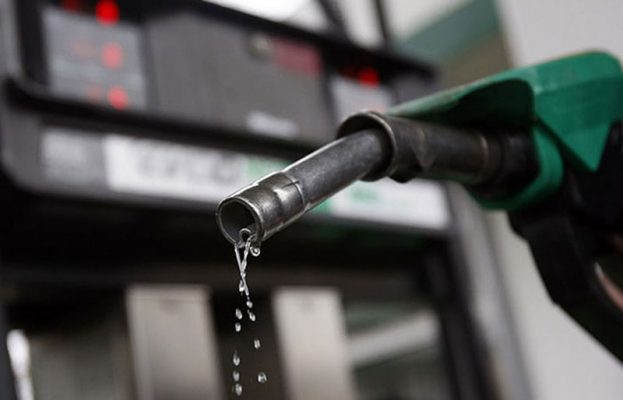
The Joint National Public Service Negotiating Council (JNPSNC), Trade Union Side, wants the Federal Government to act by September 30, 2026, demanding, among other measures, a reduction of petrol to ₦500 per litre, an immediate wage award, higher salaries and allowances and the commencement of negotiations for a new national minimum wage ahead of January 2027.
This ultimatum issued by public-sector workers to President Bola Tinubu has brought Nigeria’s cost-of-living crisis back to the centre of the national economic debate.
The workers’ demands are rooted in a genuine deterioration in purchasing power, but not all of them are equally practical. The strongest case is for an urgent wage review and a structured negotiation for a living wage; the ₦500 petrol demand is much more difficult to justify as a blanket national price target unless the Government can demonstrate a sustainable funding mechanism. The better approach is to reduce energy and transport costs through targeted intervention while protecting the fiscal gains of the reforms.
The demands should not be dismissed as mere industrial agitation. They reflect a problem that has become increasingly difficult to ignore: wages have not kept pace with the cumulative rise in the cost of living.
The National Bureau of Statistics’ latest inflation data put headline inflation at 15.39 per cent, while food inflation remained considerably higher at 19.57 per cent. For millions of households, therefore, the issue is no longer simply how much a worker earns on paper, but what that income can actually buy.
That distinction is crucial.
Nigeria’s national minimum wage was raised to ₦70,000 in 2024, following negotiations between government, organised labour and employers. The agreement envisaged a review after three years. With that review period approaching, the workers’ demand for negotiations towards a new wage structure is neither unexpected nor unreasonable.
But the proposal for a ₦500 petrol price deserves a much more complicated examination.
The workers have a point
The JNPSNC’s central argument is straightforward: petrol is not merely another consumer product in Nigeria. Its price affects transportation, agriculture, manufacturing, distribution and virtually every household. When the price of fuel rises, the consequences spread far beyond the filling station.
A commercial driver pays more to operate a vehicle. The transport operator passes the additional cost to passengers. A farmer pays more to move fertiliser, equipment and produce. A manufacturer pays more for logistics and, in some cases, alternative power generation. The trader pays more to transport goods to the market. Ultimately, the consumer bears much of the additional cost. This is why the workers’ argument that cheaper energy could have a multiplier effect is economically defensible.
The Government itself acknowledged during the earlier phase of the reforms that the removal of subsidies had imposed hardship, while arguing that the reforms were intended to repair structural weaknesses in the economy. President Tinubu said in 2024 that the reforms had caused hardship but were necessary for long-term economic repair.
The problem is that Nigerians cannot live indefinitely on promises of future benefits. Economic reform has to produce visible improvements in household welfare. If the cost of living remains substantially above the capacity of ordinary workers to pay, public support for reform will inevitably weaken.
But is ₦500 petrol realistic?
This is where the workers’ demand becomes problematic. Demanding petrol at ₦500 per litre may be understandable from the perspective of a worker trying to survive on a salary that has lost purchasing power. But a national pump-price target is not, by itself, an economic policy.
Someone must pay the difference between the cost of supplying the product and the price charged to consumers. If government fixes petrol at ₦500 while the underlying economic cost is considerably higher, the difference becomes a subsidy. The fact that it may be called an “intervention”, “price stabilisation fund” or something else does not change the economic reality.
Nigeria has already experienced the consequences of poorly structured fuel subsidies: huge fiscal costs, opaque pricing arrangements, incentives for smuggling and an unhealthy dependence on government intervention.
The lesson should not be that every form of subsidy is inherently wrong. Rather, it is that subsidies must have a clear objective, a defined cost, transparent financing, strict accountability and an exit or review mechanism.
The JNPSNC is therefore right to challenge the idea that government should simply distribute food as palliatives while ignoring the structural causes of hardship. But replacing food palliatives with an indefinite petrol subsidy would not solve the underlying problem either.
It could merely transfer the burden from household budgets to the public purse.
The ₦500,000 minimum wage question
The proposed ₦500,000 minimum wage is even more challenging. There is a strong argument for increasing wages. The current ₦70,000 minimum wage was negotiated in a substantially different economic environment, and inflation has reduced its real purchasing power. The government itself recognised the need for a wage framework capable of responding to changing economic conditions when the 2024 minimum wage was negotiated.
But an immediate jump from ₦70,000 to ₦500,000 would represent more than a sevenfold increase.
Such an increase cannot be considered simply from the standpoint of what workers need. It must also be assessed against government revenue, the capacity of states and local governments to pay, the wage bills of public institutions and the potential effect on private employers.
A massive wage increase without corresponding increases in productivity, government revenue and economic output could produce another round of inflation. It could also force weaker states to accumulate salary arrears, increase borrowing or cut spending on infrastructure and social services.
There is, therefore, a difference between saying that Nigerian workers deserve substantially better wages and saying that ₦500,000 should automatically become the statutory minimum wage. The first proposition has a compelling economic basis. The second requires considerably more evidence and negotiation.
Wage award: a more immediate option
The workers’ call for an immediate wage award may provide a more practical bridge. A temporary wage award could recognise the extraordinary pressure on workers while a broader wage review is negotiated.
But such an intervention should be carefully designed. It should be transparent, time-bound and fiscally affordable. Government should also avoid creating a situation in which every temporary wage award becomes a permanent addition to the wage bill without corresponding productivity gains.
The objective should be to protect workers from a sudden deterioration in living standards while the economy moves towards a more sustainable wage system.
The crude-for-naira proposal deserves attention
One of the more interesting elements of the workers’ position is its support for supplying crude oil in naira to domestic refineries. This deserves serious consideration.
Nigeria has spent years trying to solve the contradiction of being a major crude-oil producer while importing substantial quantities of refined petroleum products. Expanding domestic refining should reduce exposure to international refining costs, shipping and foreign-exchange pressures over time.
Nigeria also has enormous gas resources. NNPC has recently reiterated its intention to develop the country’s gas resources as a foundation for domestic industrialisation and energy security. But crude supplied to domestic refineries cannot simply be sold at an arbitrary price without consequences.
The arrangement must be transparent and based on clearly defined commercial principles. Otherwise, the country could replace one opaque subsidy system with another. The Government should publish the pricing formula, volumes supplied, participating refineries and the fiscal cost of any concession.
What should Government do?
The September 30 deadline should not become another confrontation between labour and government. Instead, it should be used to establish a structured emergency economic dialogue.
First, Government should immediately constitute the proposed wage negotiation committee. The process should include labour, employers, the Federal Government, state governments, local government representatives and independent economic experts.
Second, the Government should commission a transparent assessment of the real purchasing power of the ₦70,000 minimum wage across different parts of the country. A national wage policy should recognise differences in housing, transportation and food costs while maintaining a workable national framework.
Third, an interim wage award could be considered for public-sector workers, provided its fiscal cost is published and its duration clearly defined.
Fourth, rather than simply fixing petrol at ₦500, the government should focus on reducing the cost of energy. That means expanding domestic refining, improving crude supply to local refineries under transparent commercial arrangements, reducing logistics bottlenecks and investing aggressively in gas, compressed natural gas and other cheaper transport-energy alternatives.
Fifth, any fuel-price intervention should be targeted rather than universal where possible. If public money is available, Government should ask a fundamental question: is it better to spend the money making every litre of petrol cheaper for everyone, including higher-income consumers, or to use part of it to reduce transport costs for low- and middle-income households?
The latter could produce a greater social return.
Finally, the government must communicate honestly with workers.
The argument cannot continue to be that Nigerians should endure today’s pain because tomorrow will be better. Reform requires patience, but patience has limits. Workers need evidence that the sacrifices they have been asked to make are producing tangible improvements in their lives.
The JNPSNC’s demands therefore contain both a legitimate warning and some questionable prescriptions. Its warning should be taken seriously: Nigeria cannot build a productive economy on workers whose real incomes are continually being eroded.
But ₦500 petrol and ₦500,000 minimum wage should not become political slogans detached from fiscal and economic realities. The real challenge is to construct a wage-and-energy policy that gives workers meaningful relief without recreating the fiscal distortions that contributed to Nigeria’s previous economic problems.
The Government should negotiate, not dictate. Labour should demand, but also recognise the limits of the public purse. And both sides should move beyond the narrow question of what workers earn to the larger question of what Nigerian workers can actually afford.
That is ultimately the measure of whether economic reform is working.