
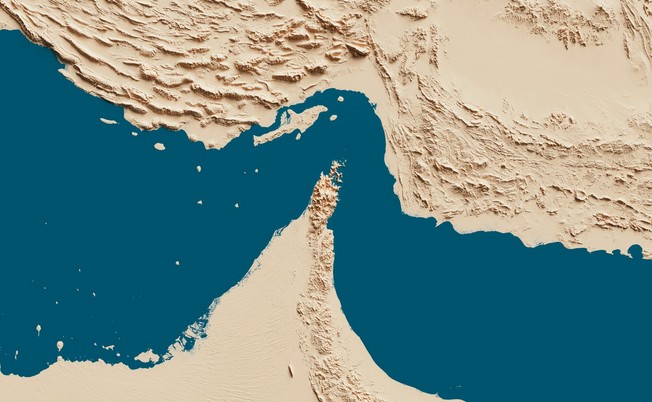
Maritime security trackers logged a fresh missile strike on commercial shipping in the Strait of Hormuz on Sunday, 13 September 2026. The United Kingdom Maritime Trade Operations reported that a projectile struck a vessel navigating the narrow waterway at dawn. The strike lands twenty-four hours after Saudi Arabia shut down its 1,200-kilometre East-West pipeline following a drone raid launched from Iraqi territory. That twin assault crushes hopes that alternative overland routes could insulate global energy consumers from the war between Washington and Tehran. Tankers and pipelines now face simultaneous interdiction across the Middle East. Energy markets must price in the reality that no export valve in the region remains entirely safe. Global crude supplies face their most dangerous physical bottleneck in half a century.
The projectile strike on Sunday shatters the fragile lull that commercial shippers had hoped to exploit. British monitors confirmed that an unidentified projectile hit the merchant vessel while it moved through the middle transit corridor. Naval authorities in the region have not yet confirmed the full scale of structural damage or the physical status of the civilian crew. The incident confirms that coastal missile batteries and loitering munitions continue to track commercial hulls with impunity. Commercial shipping lines had already reduced daily sailings to single digits following months of skirmishes and soaring insurance premiums. A direct hit on an active merchant ship will force remaining operators to abandon the passage entirely. When insurers pull war-risk cover, commercial hulls drop anchor where they sit.
The maritime attack compounds an already desperate energy emergency triggered by the shutdown of Saudi Arabia’s primary overland bypass. On Saturday, the kingdom halted crude deliveries through its East-West pipeline after a swarm of armed drones damaged pumping infrastructure south of Medina. Both Riyadh and Baghdad confirmed that the unmanned aircraft took off from launch rails operated by pro-Iranian militias in southern Iraq. The 745-mile conduit carries between four and five million barrels of crude oil every day across the Arabian Peninsula to Red Sea ports. That volume accounts for roughly five per cent of total daily global oil demand. For six months, the pipeline spared Saudi Arabia the total export paralysis that crippled neighbouring Gulf producers. Halting that flow strands millions of barrels inside desert storage tanks.
Global oil benchmarks reacted with immediate fury to the simultaneous choking of sea and pipeline channels. Brent crude futures surged back past 100 dollars per barrel during the previous week, and traders now prepare for another sharp upward leap. In the United States, retail diesel prices crossed six dollars per gallon for the first time in history, dragging domestic freight costs higher. Energy-importing economies across Europe, Asia, and Africa face acute domestic inflation shocks as replacement cargoes command extortionate premiums. Developing nations find their foreign reserves drained as central banks scramble to pay for essential petroleum cargoes at triple-digit prices. Western central bankers may have to halt planned interest rate cuts to combat persistent imported energy inflation. Expensive crude extracts an immediate tax on every manufacturing and logistics operation on earth.
The regional battlefield is widening on multiple fronts to encircle every practical maritime escape route. In Yemen, Iran-aligned Houthi forces advanced rapidly along the Red Sea coast, capturing the strategic port of Mocha before seizing Perim Island on Friday. That island sits directly in the middle of the Bab el-Mandeb strait, the historic Gate of Tears that controls entry into the southern Red Sea. With Houthi missile batteries commanding the Bab el-Mandeb and Iranian units patrolling Hormuz, regional combatants hold a physical chokehold over two primary global trade arteries. Tankers cannot safely bypass Hormuz via the Red Sea if Houthi squads track shipping from Perim Island. Commercial vessels must now take the long, expensive voyage around Africa’s Cape of Good Hope. Avoiding the Middle East adds two weeks of sailing time and millions of dollars to every journey.
The widening crisis leaves the White House facing a profound strategic dilemma with few attractive options. Visiting Ireland for a golf tournament on Saturday, President Donald Trump blamed Iran for the pipeline strike and insisted that Tehran orchestrates the chaos. Trump confirmed that Saudi Crown Prince Mohammed bin Salman phoned him on Thursday to request direct American military intervention against the advancing Houthis. Trump offered intelligence sharing instead of direct air strikes, reluctant to commit scarce naval power to another bloody ground war. The president also revealed that Houthi representatives phoned American officials directly, warning Washington to stay out of the coastal fighting. The Pentagon has already depleted stocks of shipboard interceptors and guided munitions during six months of fleet combat. Washington must choose between abandoning a crucial oil ally or plunging headlong into a multi-front regional quagmire.
Diplomatic efforts in the Gulf offer little immediate prospect of breaking the geopolitical deadlock. Iran confirmed that it will attend an emergency summit with Gulf Arab states in Muscat on Monday at the invitation of Omani mediators. A senior Iranian official spoke to reporters on Saturday on condition of anonymity, playing down any chance of a breakthrough. Tehran announced that it will present a joint transit agreement with Oman, but insisted that the waterway will remain closed until Washington meets seven specific Iranian demands. Iran demands formal recognition of its territorial control over the strait, which would grant Tehran the legal authority to collect transit fees from passing ships. Washington flatly rejects any framework that gives Iran regulatory or financial control over international navigation. Talks in Muscat will produce diplomatic posturing rather than open waters.
The crisis reveals the extreme vulnerability of an international economy built on narrow geographic passages. For decades, Western military planners assumed that aircraft carrier strike groups could easily keep international sea lanes open to merchant commerce. Cheap asymmetric technology, including suicide drones, uncrewed boat bombs, and mobile cruise missiles, has shattered that military assumption. A regional militia armed with low-cost aerial drones can shut down a multi-billion-dollar pipeline running through the desert interior. Lightly armed coastal fighters can deny passage to modern supertankers from a rocky island outcrop. Restoring genuine freedom of navigation will require either an immense military invasion or total political capitulation to Tehran’s demands. Neither outcome looks palatable to leaders in Washington or Riyadh. Global supply chains will remain hostage to Middle Eastern geography for the foreseeable future.