
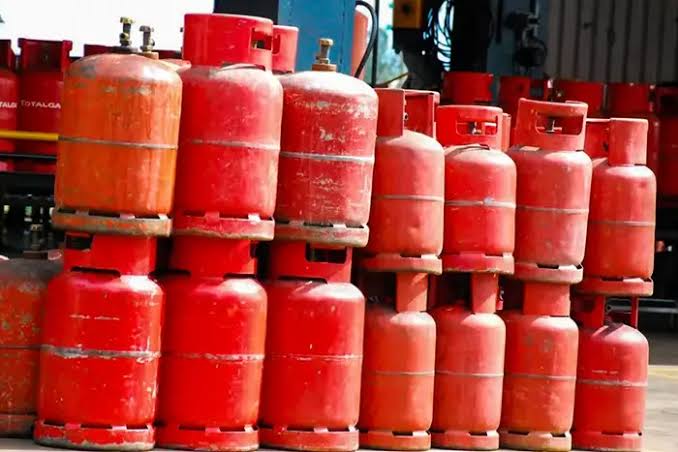
Nigerian plants and refineries now supply almost all the cooking gas entering the local market, according to the latest data from the Nigerian Midstream and Downstream Petroleum Regulatory Authority (NMDPRA). The regulator’s September 2026 fact sheet shows that domestic supply of Liquefied Petroleum Gas (LPG) rose by about 50 per cent to 4,500 tonnes a day, while imports fell by 85 per cent to 200 tonnes. Total receipts climbed nine per cent to 4,700 tonnes daily, which means local sources accounted for roughly 96 per cent of the gas that came into the market.
The shift has been rapid. In December 2025, the NMDPRA put total daily supply at about 5,200 tonnes, with domestic producers contributing 3,700 tonnes, or around 71 per cent. At the time, imports filled almost three of every ten kilogrammes sold in the country. By September, they filled fewer than one in twenty.
More local gas, however, has not translated into more gas overall. Consumption rose eight per cent to 5,200 tonnes a day in September, up from 4,800 tonnes in August, leaving the market about 500 tonnes short every day. NMDPRA Chief Executive Rabiu Umar said demand was running 33 per cent above the regulator’s benchmark and now outstrips supply. LPG stock sufficiency stood at 15.9 days, roughly half the 30-day minimum the regulator considers safe.
A comparison with July shows where the gap came from. In that month, total supply reached 5,332 tonnes a day, made up of 4,373 tonnes from domestic sources and 958 tonnes of imports, with the Dangote Refinery alone contributing 829 tonnes. September’s domestic output was only about three per cent higher than July’s, but total supply was about 12 per cent lower because imports had almost dried up.
The market has been unsettled for much of the year. Domestic supply slipped by about 10 per cent in June, prompting the Minister of State for Petroleum Resources (Gas), Ekperikpe Ekpo, to direct marketers to increase imports and order the NMDPRA to step up engagement with producers and importers. An emergency stakeholders’ meeting in Abuja followed, and national stock sufficiency rose from about 11 days to 22 days by July. The September figure of 15.9 days shows that buffer has thinned again.
For households, the real test remains price. The Dangote Refinery listed its LPG at ₦1,025 per kilogramme on October 20, about ₦12,812 for a 12.5kg cylinder before transport, distribution costs and retailer margins. Retail prices across 15 locations in September ranged from ₦1,200 to ₦1,700 per kilogramme, putting a 12.5kg refill between ₦15,000 and ₦21,250. Even within Lagos, buyers in Ejigbo paid ₦1,300 per kilogramme while those in Ayobo and Ogba paid ₦1,700.
Those prices sit against a volatile recent history. The National Bureau of Statistics put the average cost of refilling a 12.5kg cylinder at ₦18,636.77 in October 2025, up 15.36 per cent in one month. That jump followed a strike by the Petroleum and Natural Gas Senior Staff Association of Nigeria (PENGASSAN), during which prices at some outlets climbed from ₦1,100 to as much as ₦1,800 per kilogramme.
Cooking gas was one of the few bright spots in an otherwise difficult month for the downstream sector. NMDPRA data show petrol receipts fell 23.4 per cent to 38.7 million litres a day in September, below consumption of 44.4 million litres. Diesel receipts dropped to 8.7 million litres a day from 14.5 million litres in August, the lowest level in 13 months.
Industry operators welcomed the LPG numbers but warned against complacency. “Local production has increased, which is the reason for the result,” said Oladapo Olatunbosun, former National President of the Nigerian Association of Liquefied Petroleum Gas Marketers (NALPGAM). He urged the government to back indigenous operators and major producers, including the Dangote Refinery, to raise output. “The market is wide and large, and the more we get people investing in the production and distribution of LPG, the more available the product will be,” he said.
The National President of the Oil and Gas Services Providers Association of Nigeria (OGSPAN), Mazi Colman Obasi, described the growth as positive but said the benefit must reach consumers. “The real test is whether consumers are seeing improved access and more affordable prices,” he said. Obasi cautioned that higher supply would not automatically lower retail prices, pointing to transport, logistics and exchange rate costs.
The regulator expects the market to keep growing. Umar said the NMDPRA projects Nigeria’s LPG market to expand from 1.8 million to 4.0 million tonnes a year, as gas takes a bigger role in clean cooking and transport.