
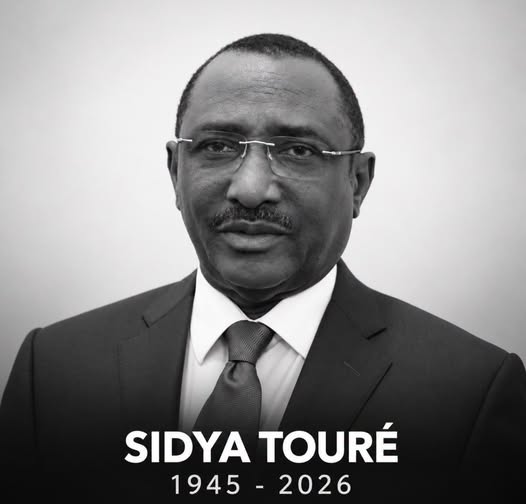
Sidya Toure, the veteran opposition chief and former prime minister of Guinea, died in a Paris hospital on Friday, 25 September 2026, aged 81. He spent his final fortnight at the American Hospital of Paris after doctors transferred him from Abidjan following a sudden illness. His death closes a career spent navigating the violent turns of Guinean politics. Exile claimed him in the end. Toure spent his closing years abroad after fleeing Conakry following the military coup led by General Mamady Doumbouya in September 2021.
Before taking command of the opposition, Toure served as a technocrat under General Lansana Conte. Conte appointed him prime minister in July 1996 to mend ties with western creditors and overhaul a broken treasury. Toure imposed rigid fiscal discipline, repaired relations with multilateral lenders, and restored public electricity to parts of the capital. Technocratic success rarely buys lasting political safety. Conte removed him in March 1999 as military factions grew suspicious of his growing authority and civilian popularity.
The former prime minister promptly redirected his career toward civilian opposition, taking over the Union of Republican Forces in 2000. He ran for the presidency in 2010 and 2015, building a loyal following among middle-class voters who admired his managerial skill. Deep ethnic loyalties, however, consistently blocked his path to power. He placed third in 2010, watching Alpha Condé and Cellou Dalein Diallo divide the electorate along communal lines. Toure found himself squeezed between entrenched ethnic voting blocs and repressive state security agencies.
His final years proved the most bitter as the ruling junta snuffed out the remaining democratic space in Conakry. General Doumbouya dissolved Toure’s party in March 2026 alongside forty other political groups, outlawing peaceful dissent. The military regime went further by staging an uncontested presidential vote in December 2025 that excluded every major opposition leader. Toure watched these reversals from Ivory Coast, powerless to stop the re-militarisation of Guinean public life. Incumbent Prime Minister Amadou Oury Bah praised him on Friday as a pragmatic reformer, yet that official tribute conceals the harsh reality of Toure’s enforced absence.
Toure belonged to a generation of West African technocrats who believed economic competence could cure the vices of autocracy. His passing deprives Guinea of an experienced voice during an escalating constitutional crisis. The junta in Conakry now rules without serious civilian challengers at home. Repression creates its own political void. By forcing seasoned reformers like Toure into foreign graves, the military regime trades long-term institutional stability for immediate, fragile control.